
Trials and Tribulations: Chasing a Bankrupt Development Site
What four months inside a bankruptcy proceeding taught us about distressed real estate.


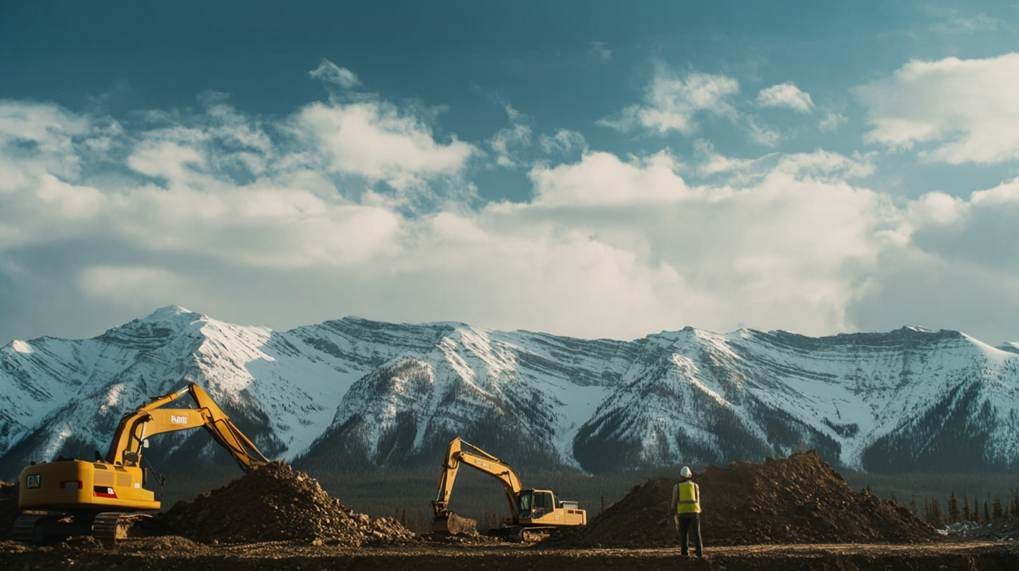
Buying a partially finished development site out of bankruptcy.
This isn’t a how-to guide for finding bankrupt projects, and it isn’t a legal primer on the bankruptcy code.
These are observations from the last four months pursuing a deal that is currently in bankruptcy proceedings.
The project wasn’t ours originally. We have no credit claim and no potential loss beyond pursuit costs. The process has been time-consuming, complicated, and expensive.
We didn’t set out looking for a bankrupt site, and while we had no extensive prior experience with the bankruptcy process, we wouldn’t rule out pursuing similar deals moving forward (at least for now).
The buyout group invited us to join on counsel’s recommendation, and after reviewing the details, we decided the project was worth the time and cost.
In this newsletter, we’ll cover what we’ve learned so far, an overview of the process, and what actually matters when pursuing one of these deals.
Like most complex situations in real estate, reading about them only takes you so far.
Make a plan, and then be prepared to change it.
In four months pursuing this deal, almost every variable has shifted at least once: facts, timelines, strategies, prices, sale procedures, and partners. An estimated three-month process to make 15 points on a loan payoff turned into a six-month process to take title. A solo pursuit became a potential partnership between two or three groups. Initial equity requirements that looked like $10M grew to $30M.
Flexibility and a willingness to adjust when the facts change is not optional.
This particular asset is a partially built development, which adds another layer of complexity and the main reason they brought us in.
There is no clear collateral value. Reasonable people can disagree on feasibility and go-forward development strategy, and costs and timelines to stabilization aren’t clear without extensive due diligence.
What most parties do agree on is that the project represents a real opportunity to build something distinctive and profitable. That combination of complexity and hard work is usually where opportunity lives, and why we like it.
(Almost) every real estate bankruptcy process has one thing in common: debt. There is always at least one loan in the capital stack in default, and often more than one.
This case has multiple loans, intercreditor disputes, and varying levels of seniority. Since it was an active development site when the trustee took control, there is also a long list of unsecured creditors, mostly trades and service providers owed money at the time.
What does the process look like?
At a high level, there are two ways to purchase a real estate asset out of bankruptcy. A liquidation sale, which is the more common path, or a plan of reorganization, which takes longer and costs more, but can produce better outcomes.
In liquidation, the largest creditor holds an advantage. They can bid up to the full amount of their claim through a credit bid, which puts them ahead of outside buyers. That said, they also lent the money in the first place, so they are rarely in a position to celebrate even if they win the asset.
Claim priority matters as much as claim size. When collateral value doesn’t cover all existing claims, it’s the most senior creditor with an impairment who is most likely to end up with title.
A plan of reorganization requires consent from several classes of creditors, including the largest, and takes longer to negotiate and implement. The potential upside is that the existing capital stack gets restructured into something the project can actually carry going forward. That restructuring can mean less cash required at closing even if the overall price is comparable, and outstanding issues can be resolved through the court rather than inherited by the new ownership.
Whether a plan of reorganization makes more sense than a liquidation depends entirely on the specifics of the situation.
Important considerations beyond price.
Assume for a moment that a plan of reorganization is the right path. The largest creditor classes must agree, and the trustee must approve the plan.
In order to support a plan, what does the trustee care about beyond feasibility? Two things.
First, their fees.
The trustee is typically a bankruptcy specialist who retains their own counsel to represent the estate’s interests. Any plan must adequately address its fees, or it won’t move forward, regardless of creditor support.
Second, recovery to the unsecured creditor class. These are the trades, vendors, and consultants that the estate owes money to. Often, they are small businesses without the balance sheet to absorb a significant loss. They may have already purchased materials or paid wages for work that the estate can’t cover.
The trustee takes recovery seriously. Whether they receive 10 cents on the dollar or 50 cents, and whether that recovery comes now or later, may represent a small dollar difference to a buyer but carries significant weight in the trustee’s evaluation of the plan.
Capital considerations.
Most capital pursuing real estate is not well-suited to buying assets out of bankruptcy.
Plenty of capital providers will say they want distressed deals with an attractive basis because of a complicated situation, the kind where someone else lost money.
The interest tends to change once the details come into focus. Asset condition, active litigation between parties, DIP financing terms, and any liens or judgments that exist or are being contested all look different up close than they did from a distance.
That narrowing of the field is actually useful.
The complexity that discourages most buyers is what supports the right basis and the right returns. Competition for these assets is limited by design. Often, there is only one outside buyer, and the only other party with leverage is the senior lender, who almost never wants to own the asset.
Two types of capital work well in this context.
The first is capital that, once it has done its diligence and funded the deal, limits day-to-day involvement and leaves execution to the sponsor. The second is capital that is actively involved and brings genuine bankruptcy experience, like in-house legal capability, diligence resources, or relationships that create an advantage in the process.
The type of capital that creates problems is the hands-on variety without bankruptcy experience. That combination has the potential to derail work already done, introduce legal counsel who doesn’t know how to work with the trustee, and slow down a process that depends on all parties moving in the same direction.
Where things stand.
Four months in, we’re still in the middle of this.
Bankruptcy acquisitions don’t resolve on a predictable timeline, and the parties involved - trustees, creditors, investors, unsecured claimants, and the bankruptcy court itself - all have distinct interests that must be understood and navigated alongside the asset itself.
Timelines change. Strategies change. Claims, procedures, and priorities change. Navigating these changes while staying front-footed and proactive is critical to achieving the desired outcome – ultimately gaining control of the asset.
What we haven’t covered yet is how we found our way into this deal, how we structured diligence on a partially built asset, and what the path to closing looks like from where we’re standing. More on that in the second part of this series.
If you are interested in investing in our fund, let us know via the investor interest form below.
AND
We are looking for long-term capital partners interested in a 5 to 10-year hold and looking for investment opportunities in the $10-$50mm range.
OR
If you have a development site that fits one the following criteria, we’d love to see it:
1 - In Manhattan with at least 40,000 buildable square feet zoned for residential use as of right, or a good candidate for an office-to-residential conversion
2 - Mixed-use, residential, or hospitality site in the mountain west
3- Destination or resort-anchored site with at least 50k of buildable ft
Most importantly, we want to meet and begin building relationships with people who are interested in what we are doing and who believe in how we approach the work, regardless of interest in our current deals.
Send us a note if you’d like to chat!
In addition to our development work in NY, MADDPROJECT provides fee development and professional project management services across the US.
Need help and don’t know where to start?
Have a specific subject you want to see us tackle in a future Newsletter?
Drop us a note!

 | A guest post by
|